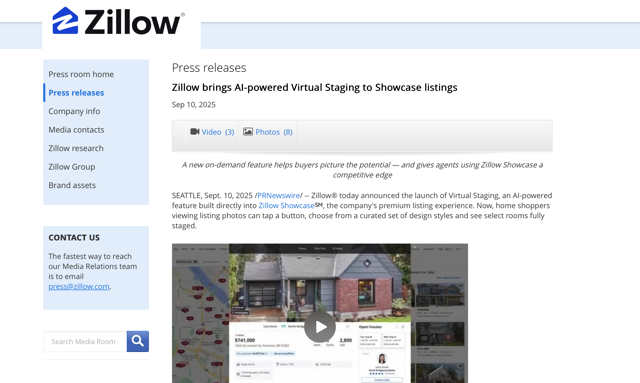
How property managers boost listings by 40% with AI staging
The real estate industry has entered a new era where first impressions are made in seconds, not minutes. For property managers competing in crowded digital marketplaces, the challenge is clear: capture attention immediately or lose potential tenants to the next listing. AI-powered virtual staging has emerged as the solution that transforms empty spaces into compelling, move-in-ready homes—and the results speak volumes.
The Numbers Don't Lie: AI Staging Delivers Measurable Results
Research shows that virtually staged listings command 40% more online views compared to their non-staged counterparts. This dramatic increase in visibility translates directly into tangible business outcomes for property managers.
The impact extends beyond simple views. Staged homes attract 74% more interest from serious renters, while simultaneously filtering out tire-kickers. Perhaps most importantly, the increased engagement converts into action: 41% of agents report that clients are more willing to schedule in-person walkthroughs after viewing staged photos online.
Why AI Staging Outperforms Traditional Methods
Traditional staging has long been the gold standard for showcasing properties, but it comes with significant drawbacks for property managers. Physical staging typically costs between $2,800 for a full property, with furniture rental, photography coordination, and logistics consuming valuable time and resources.
AI staging flips this model entirely. Modern platforms can deliver professionally staged images in 30 seconds to 48 hours, compared to the three to seven days required for traditional staging. The cost difference is equally striking: while traditional virtual staging services charge $10 to $50 per photo, AI-powered solutions can cost as little as $0.03 per image.
This efficiency allows property managers to maintain larger portfolios without sacrificing presentation quality. When a unit becomes vacant, it can be listed within hours rather than waiting days for staging coordination.
How Property Managers Are Using AI Staging Strategically
The most successful property managers aren't simply replacing all photos with AI-staged versions. They're implementing strategic approaches that maximize both transparency and impact.
Multi-Style Testing for Target Demographics
AI staging platforms allow property managers to generate multiple design styles from a single set of photos. A downtown loft can be staged with modern minimalist furniture for young professionals, then restaged with warmer, family-friendly decor for a different audience segment. This customization helps properties resonate with specific renter demographics without the expense of multiple physical staging setups.
Empty Space Transformation
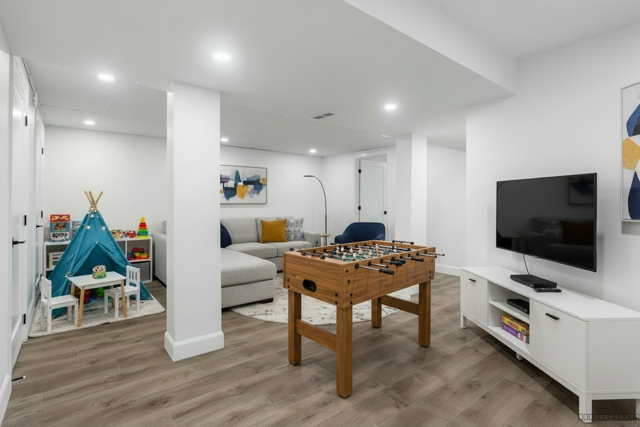
One of AI staging's most powerful applications is bringing life to vacant units. Properties with outdated furnishings or completely empty rooms can be digitally transformed into inviting living spaces. In one documented case, a condo listing saw a 72% spike in listing views and a 44% increase in qualified leads after virtual staging was applied to previously overlooked photos.
Transparent Disclosure
Ethical property managers understand that transparency builds trust. The most effective approach includes both staged and unstaged photos in listings, clearly labeled as "virtually staged" to set accurate expectations. This honesty actually increases credibility rather than diminishing it, as renters appreciate seeing both the potential and the reality of a space.
The Technology Behind Modern AI Staging
Today's AI staging tools leverage machine learning algorithms trained on millions of interior design images. These systems understand perspective, lighting, and spatial relationships, allowing them to place furniture that appears naturally integrated into the room rather than awkwardly superimposed.
Advanced platforms offer features like furniture removal, where existing dated furnishings can be digitally replaced with contemporary pieces. Natural language editing allows property managers to refine images using simple commands like "add a dining table by the window" or "change the sofa to a darker color."
The technology continues improving rapidly. While earlier virtual staging often looked artificial, current AI systems produce photorealistic results that maintain the architectural integrity of spaces while enhancing their appeal.
Real-World Implementation: Getting Started with AI Staging
For property managers ready to incorporate AI staging into their marketing workflow, the implementation process is straightforward:
Step 1: Prepare Properties for Photography Even with AI staging, quality input photos are essential. Empty spaces should be thoroughly cleaned, with minor repairs completed and optimal lighting established. Professional real estate photography still provides the best foundation for AI enhancement.
Step 2: Select an AI Staging Platform Choose a platform that offers the style flexibility your properties require. Consider factors like turnaround time, cost per image, editing capabilities, and the realism of rendered furniture.
Step 3: Develop a Consistent Process Create standardized workflows for when and how to use AI staging across your portfolio. Establish guidelines for which room types to stage, preferred design styles for different property types, and disclosure language for listings.
Step 4: Test and Measure Track performance metrics for staged versus unstaged listings. Monitor views, inquiry rates, showing requests, and ultimately lease conversion rates. This data will help refine your approach and demonstrate ROI to stakeholders.
The Impact on Competitive Positioning
In markets where 97% of renters begin their search online, visual presentation has become the primary differentiator between properties. AI staging allows smaller property management firms to compete with larger competitors who might otherwise dominate through sheer marketing budget.
The technology levels the playing field by making professional-quality presentation accessible and affordable. A single property manager can now present dozens of units with the same polished aesthetic that previously required dedicated marketing teams.
Addressing Common Concerns
"Won't renters be disappointed when they see the actual empty unit?" When properly disclosed, AI staging actually helps renters. It provides spatial context and demonstrates potential, helping them make more informed decisions about whether a space fits their needs. The key is combining staged photos with clear, unstaged shots and prominent disclosure language.
"Is AI staging ethical?" When transparently labeled, AI staging is simply a visualization tool—no different than architectural renderings for new construction. Professional organizations including the National Association of Realtors encourage disclosure of digitally altered images, and ethical property managers gladly comply.
"Will the technology replace traditional staging entirely?" Not completely. High-end luxury properties may still benefit from physical staging for in-person tours. However, for initial online marketing and the vast majority of rental properties, AI staging provides superior value and efficiency.
The Future of Property Marketing
AI staging represents just the beginning of AI's transformation of property management marketing. The technology continues evolving with features like 3D virtual tours, augmented reality previews, and AI-generated property descriptions already emerging.
Property managers who adopt these tools early position themselves to capture the attention of increasingly digital-native renters. The 40% increase in listing views isn't just a temporary boost—it's a sustainable competitive advantage in an industry where visibility directly correlates with vacancy rates and rental income.
Taking Action
The property managers seeing the most dramatic results from AI staging share common characteristics: they experiment with different approaches, measure their results carefully, and continuously refine their techniques based on data.
Starting small makes sense. Test AI staging on a handful of difficult-to-rent units or properties that have sat vacant longer than average. Compare performance against your standard listings, then expand based on results.
The technology barrier to entry is minimal, the cost is negligible compared to traditional alternatives, and the potential impact on your listing performance is substantial. In a competitive rental market, the question isn't whether to use AI staging—it's how quickly you can implement it effectively.
When implementing AI staging in your property listings, remember to clearly label all virtually staged images to maintain transparency with potential renters. This practice builds trust while still providing the visualization benefits that drive engagement. With RoomPivot, you can enable watermarks to seamlessly label an image as AI enhanced.